
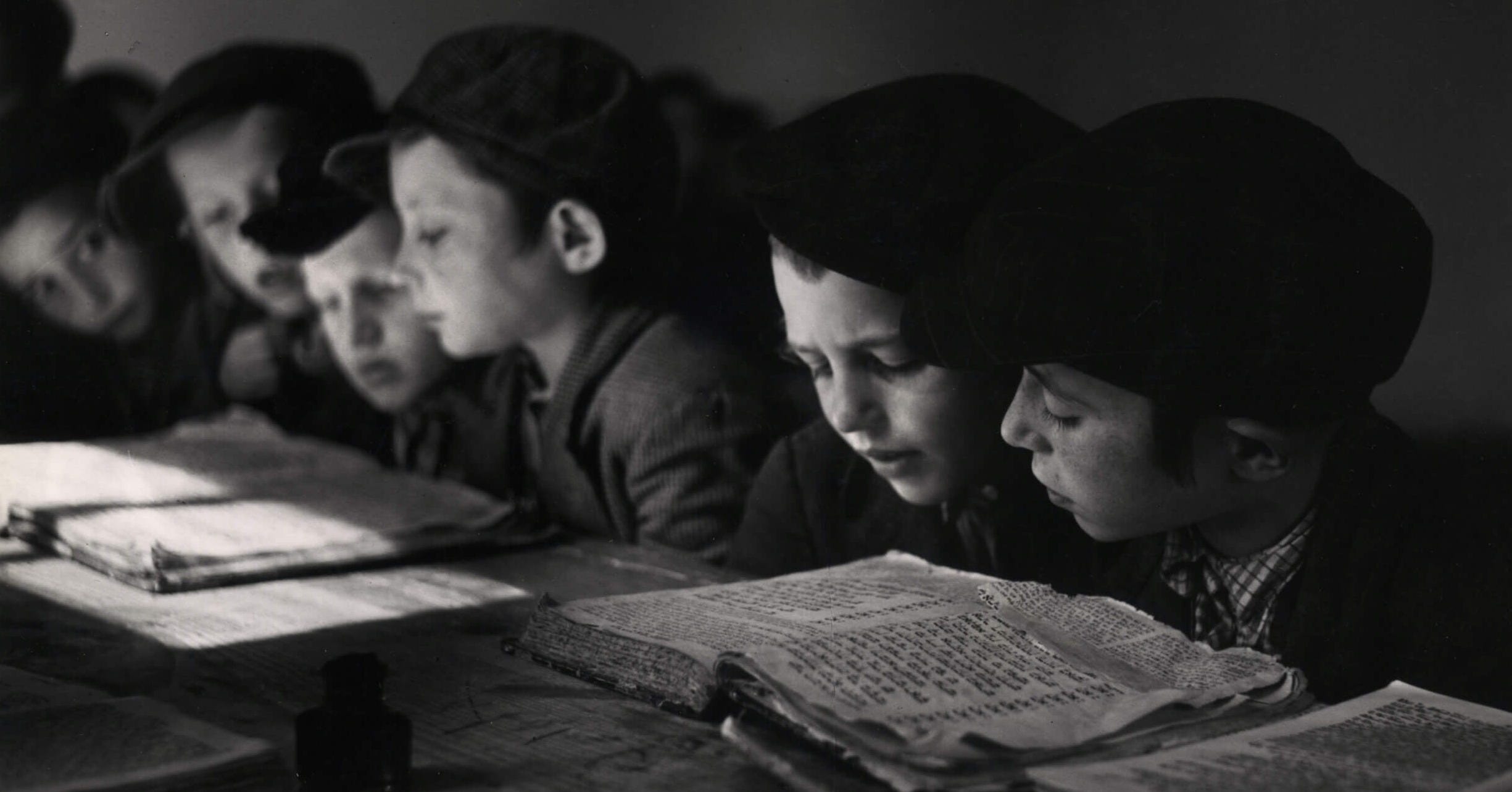
I will be continuing my series on the landscape of Jewish AI learning applications, but I want to pause and ask: What do we have to look forward to if things go right?
I think the best case scenario for Jewish learning in the age of AI is that it becomes something like modern Shabbat: a rare space where you don’t need to always say yes to the technologies of the future and a model that is inspiring far beyond the boundaries of Jewish community.
Shabbat did not begin as a day of technological moderation. It became that over time because modern technology was disrupting the things people liked about the day and communities had the clout to resist them. First they resisted nonstop factory work, then electricity, then connectivity—and pretty soon, I suspect, pervasive augmentations of reality. In a little over a century a day of rest has become a day of unplugging and shared physical reality. This happened because people liked what Shabbat felt like and they didn’t want it to change. Shabbat isn’t anti-tech, but tech serves Shabbat rather than the other way around.
If we know what we want Jewish learning to feel like, it will follow a similar trajectory. Right now Jewish learning is a mixture of important content and important experiences, but the content ultimately facilitates the experiences rather than the other way around. AI learning applications, on the other hand, are mostly concerned about learning outcomes. They don’t care whether the learning environments are good—or even contain other humans—as long as the right skills and ideas get into your brain. To the degree they are enjoyable, it is to increase speed of acquisition.
But Jewish learning is about a human process, about teachers and students interacting. It’s about talking through ideas with other people (often in an energetic room), about exploring, about creativity, about disagreement. It’s about teachers as people and students as people. It’s about learning for the sake of learning—a concept called “Torah lishmah.”
Content matters in Jewish learning spaces, but it matters in the same way that you need to know how to ski in order to enjoy the slopes. When you know more, your learning experiences are better. The more you ski, the more the slopes open to you. The content serves the process, not the other way around. And the are always more slopes.
Now, I don’t think all Jewish educators will agree with what I’ve just said. In fact, as Max Hollander has written beautifully, some rabbis thought that information acquisition was the point of study. It is certainly not cut and dry—but AI will force a clarification of values, and I think the outcome will be best if we don’t sit on the fence on this one, keeping the debate open instead of picking a principle. Just like electricity helped clarify what Shabbat was supposed to feel like (nobody called it a “day of unplugging” in 1920), AI may clarify what it’s supposed to feel like when you learn Torah.
This doesn’t mean Jewish learning must become allergic to AI. Shabbat isn’t allergic to technology; it just uses it to further its goals (Youtube link). For example: Jewish learning might use AI to speed up some basic skill acquisition—but only to a point. If the experience is the goal, there’s no reason to make it unnecessary to open up a dictionary or talk to another person. Promote the parts of learning that keep people coming back to learn more.
In fifty years, I can imagine Jewish learning having a new reputation which is now only a glimmer in the eye: A focus on the craft of learning itself, on the joy of discovery and interaction with human teachers and other human learners. Learning that is allowed to be slow and inefficient. Learning that rewards carrying skills inside your brain.
Today, “Jewish learning” means the learning of Jewish subjects, which typically happens in a particular manner. In the future, “Jewish learning” may come to mean a *style* of learning: to learn in the Jewish style. People might take a “Jewish learning” approach to studying Russian literature, or history. Jewish-style learning as human learning, as a learning to be savored rather than optimized.
I think this is a reasonable thing to desire.
I love the reasoning. Good work.
Abraham Leibson, Lambertville, NJ
Love this idea of a possible "Jewish-style" of learning and I think it would be cool to explore what this looks like in a bit more depth.
A favorite professor of mine, Prof. Olga Litvak (she's been on a couple podcasts in the Jewish world recently), takes this concept very seriously and actually uses "Jewish-style" learning of texts in her Jewish history classes in addition to her Russian literature classes. What this looks like to her is Chavrusa one-on-one learning and a thorough line-by-line analysis of whatever text it is (in addition to a bunch more)–a whole lot of fun!