
This is the third in an ongoing series about designing a new type of digital dreidel. Part 1 | Part 2
When I got into the dreidel business, I made a deal with myself: Don’t let this take over your life, kid. It’s fun, but it needs to stay secondary.
For the Dreidel20, this has worked out pretty well. I only sell the dreidel to retailers, so I don’t need to deal with thousands of small orders. Costs are small; margins are good. The dreidels almost sell themselves.
But this digital dreidel project was demanding too much attention. I couldn’t half-ass it. I needed to market it properly.
Beyond fears of being scooped by a large-scale manufacturer, the main bottleneck was capital investment. My previous dreidels had struck a nice balance: low effort, with enough profit to support a gamble on the next product and a little to take home. Low risk, low-to-moderate reward. The digital dreidel, on the other hand, was going to take real money—electronic components were particularly expensive during the pandemic—and there are much better economics of scale for electronics that there are for plastic dice. The difference between 250, 2,500, and 25,000 units makes a huge difference to the final product’s cost.
This meant that the optimal way to do the Dreidex was to do it big and well. This meant that I needed a compelling preorder campaign, which was going to be a whole thing (if you’re wondering why I haven’t plastered these posts with big PREORDER HERE buttons, it’s because I’m still not quite there).
So the thing just sat there. The designer who helped me with the first two prototypes left the project. All I had left was some circuit boards and a dream.
But I couldn’t stop thinking about it. Like I wrote in the first post, POV fidgets are 90% of the way to a dreidel already, and it drove my crazy that I couldn’t figure out that last 10%.
And so, this year, I decided to take another stab.
Actually, two stabs.
Did my dreidel actually already exist?
I like doing soldering projects with my kids. The things you can build are cool—rudimentary game consoles, clocks, calculators, FM radios, blinky light toys—and as long as you’re using through-hole components the kids can mount everything themselves, even use the soldering iron if they’re old enough. I’m often looking on AliExpress for new kits.
As I’ve mentioned, POV fidgets are frequently sold as kits. A lot of these just have flashing lights; they’re not designed to display anything as complex as words.
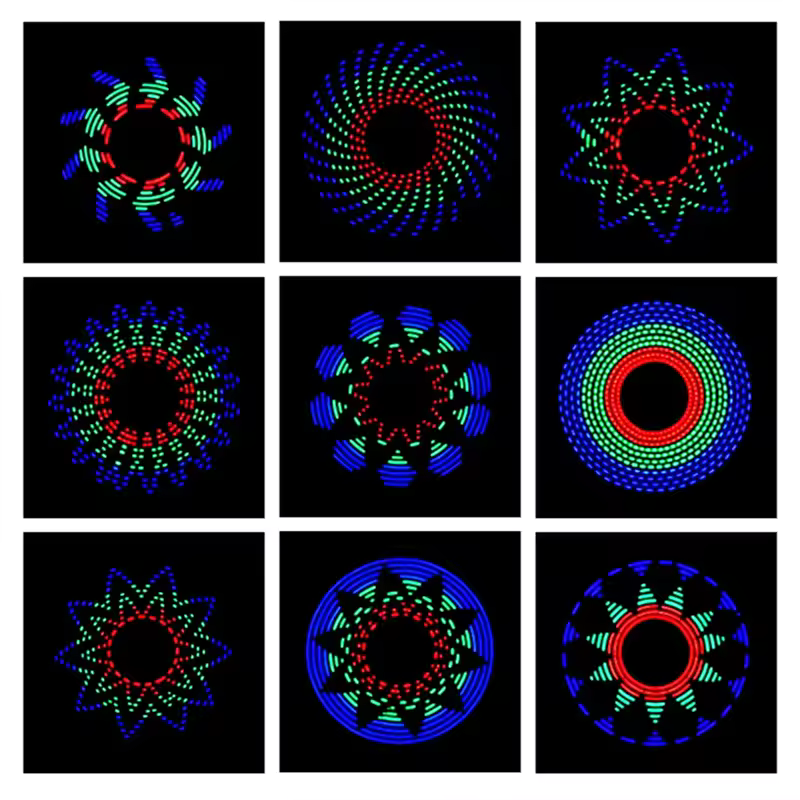
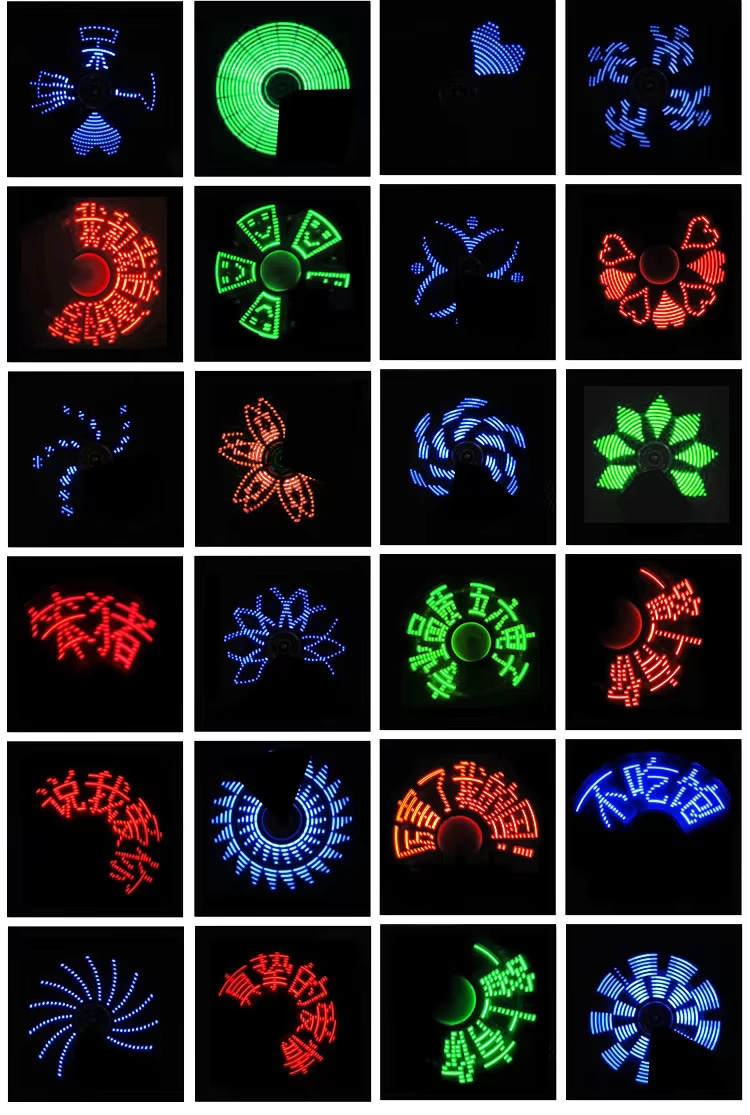
But a few seemed awfully close to what I wanted. One fidget in particular caught my eye: It had 12 LEDs, just six(!) resistors, and a very basic microcontroller. It came with a simple but effective laser-cut case. It could display text—even scrolling text, along with rudimentary animations!
What most excited me, however, were four tiny holes on the side of the circuit board. They’re labelled GND/TX/RX/VCC.
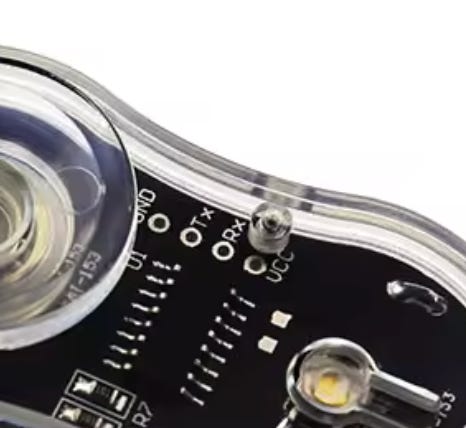
If you know anything about electronics, you already know why this is exciting. VCC and GND let electricity flow to and from the board. RX and TX are for data transmission.
These four holes meant that the board wasn’t locked off; it was open to the outside world. And if it was open to the outside world, it could probably be reprogrammed.
Then I hit upon a second bit of luck. I found another kit, almost identical to the first, that was designed to be reprogrammed. It even came with a programmer, which is the bridge between the board and a computer. And it came with software designed to do the reprogramming!
Was this the solution?
Two microprocessors diverge in the woods
The truth is that I still don’t know. The previous two posts were about events that happened years ago. This post is about something still under development.
The advantages of repurposing a pre-designed device are obvious: the production pipeline already exists, and the design costs have been eaten by somebody else. Also, this device is about as bare bones as you can get, which means that costs stay low. The design is clever.
But there are disadvantages, too. The software to reprogram the device, along with all documentation, is in Chinese. This isn’t an insurmountable problem—point your phone at a computer screen and you can translate just about anything—but it’s very annoying. The bigger problem is that the software doesn’t accommodate the most crucial function: choose a random letter every time you spin the device.
A second issue is the processor. The device uses an STC8 microcontroller, which is designed to be cheap and power efficient. Unfortunately, the STC8 also has very little internal memory, which creates hard limits on the sophistication of the graphics. It’s also not the chip of choice for a reprogrammable device; it’s more likely to go in a rice cooker than a 3D printer. Finally, the chip was designed in China and outside of China it doesn’t have a big hobbyist community. All this means that going with this device would probably mean locking it down to everyone except developers. It would be a toy, not a platform.
Some of these problems are surmountable. The factory that makes this device is happy to preload the chips with whatever code I want, and the Chinese software is just for encoding text, which means it’s not strictly necessary. One path I’m pursuing is to just create new code—and in fact there are reasons to do this no matter what, as I’ll explain in a different post. The viability of this path was demonstrated by a video I received from one of my developers, who successfully reprogrammed the device while bypassing the software.
Still, this path only works if not a single component needs to be added. It remains to be seen whether this is possible.
The alternative is to go back to my own design and just make it better. I can stick with the ATmega328 microprocessor, which is more powerful and easier to program. I can control the physical shape of the device. I can add additional buttons and USB connectivity. This device would be more costly, but I’d have completely control over it, and it would be much more powerful.
So I’m pursuing this path, as well. The Dreidex v0.3, prototyped earlier this year, is only slightly smaller than the Dreidex v0.2, but I’m already starting to see promising results. We’re going to shrink it further.
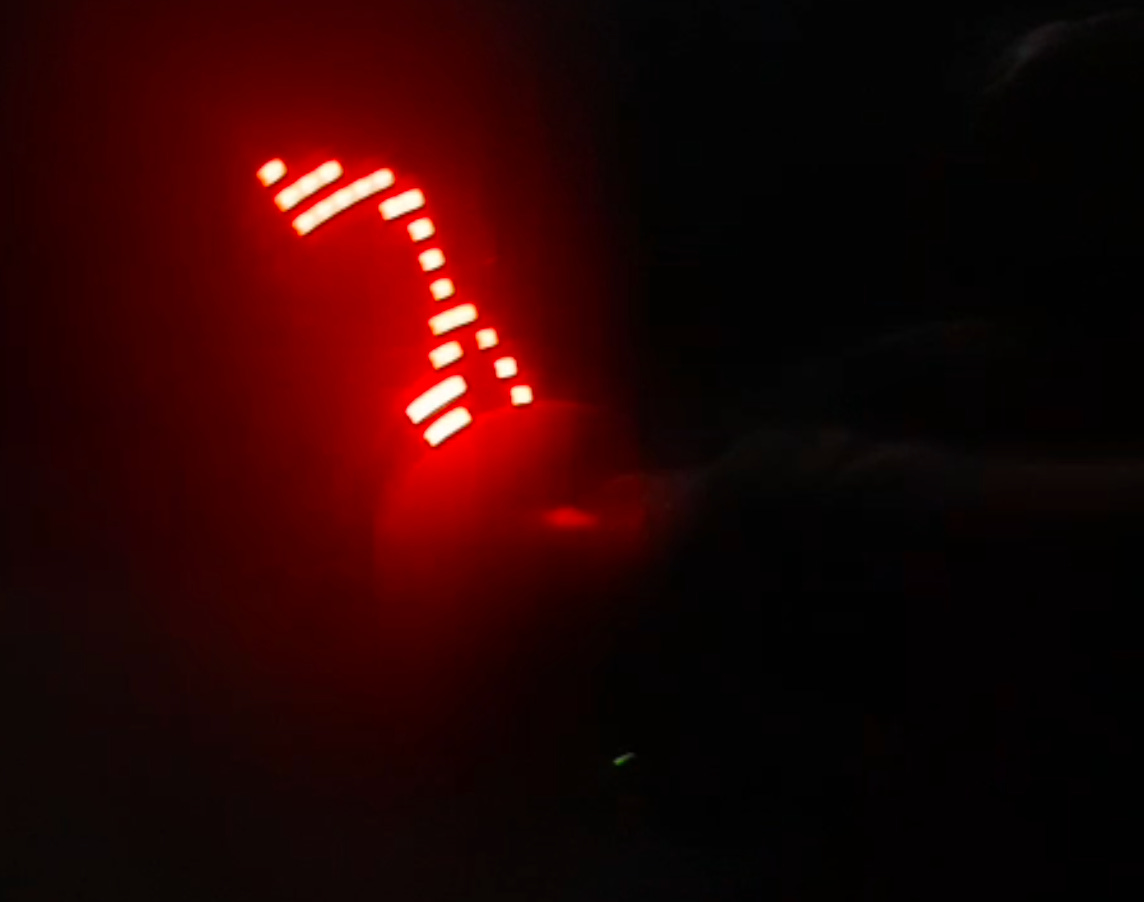
Perhaps no in-progress footage has made me happier than the twelve second test clip here.
Hanukkah, the holiday of lights. In the darkness, a dreidel shines.
But something is missing
I still don’t know which direction will ultimately win out. It’s possible that I will end up shipping both. The twenty-sided dreidel exists in regular and deluxe versions; perhaps the Dreidex will, too.
But in the course of developing these devices and showing them to people, it has become clear that the hardware is only half piece of the puzzle. The device needs to display a random Hebrew letter on each spin, but the way that it displays that letter is what will sell the device. It’s time to think about the user experience, the feeling that people get every time they spin the Dreidex. What does this device need to display to give you a sense of delight? What does it need to do to make you feel like you’re playing dreidel?
One of the most delicious moments in creative work is realizing that you’ve created an entirely new problem that requires even more creativity to resolve. In this case, the development of dreidel hardware has forced me to think through how exactly a digital dreidel ought to be coded.
The dreidel hardware is in development.
Next up: the world’s very first dreidel software.
This story will be continued. Happy Hanukkah!
For delight, have all four characters flashing in sequence for 5-10 seconds, then randomly stop on one.
Please make this project happen!